
Ways to Reduce Costs with Automation in Textiles
The intense competitive environment in the global apparel and textile market compels manufacturers to both increase quality and keep unit costs at the minimum level. Raw material waste, labor losses, and time management errors in traditional textile factories constitute the largest items of general operating expenses. The most effective way to bring these costs under control is digitalization in the cutting room and preparation processes. The advanced automation systems we manufacture in Sakarya Akyazı enable enterprises to optimize their operational expenses by providing this transformation.
Optimizing Raw Material Costs: Waste Management The highest cost item in textile production is always the fabric itself. Since raw materials constitute approximately 50% to 70% of the total product cost, even millimetric savings to be made during cutting mean gaining thousands of meters of fabric in the long run.
Millimetric Control with the Automatic Marker Spreading Machine The misalignment of fabric edges during the spreading process leads to keeping the cutting allowance (margin) wide in order to prevent the patterns from overflowing outside the fabric. Automatic marker spreading machine solutions spread the fabric on top of each other with millimetric precision using electronic photocell systems. Minimizing edge misalignments directly prevents fabric waste by narrowing the cutting allowance.
Digital CAD Integration and Smart Layout Modern marker preparation systems arrange the digital patterns (HPGL, DXF) coming from the pattern room in a way that leaves the minimum amount of gaps. The fully compatible operation of automatic spreading and cutting systems with this data ensures efficiency by optimizing the use of empty space on the fabric.
Preventing Stretching-Induced Errors: Tension Control In manual spreading or low-quality mechanical systems, the fabric is stretched while being spread. After the fabric is cut and moves to the sewing stage, it releases the stress on it and returns to its original form (shrinks). This situation causes the manufactured pieces to turn out smaller than the designed size and leads to a significant amount of defective production (waste).
-
Zero-Tension Feeding: High-technology spreading systems spread the fabric on the table with zero tension using servo-motorized drive units. The fabric is preserved completely in its natural form and made ready for cutting.
-
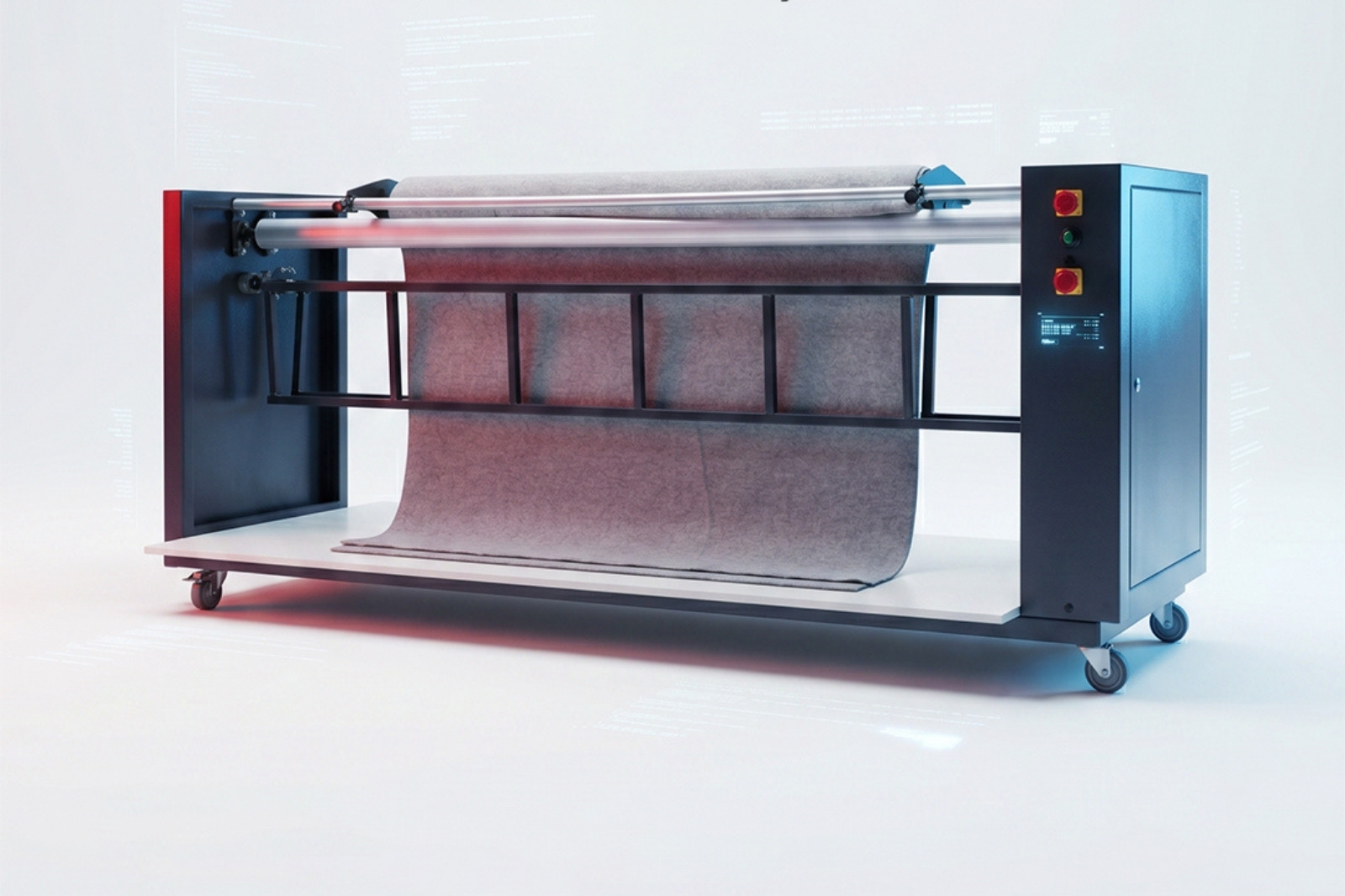
Tension-Free Fabric Unwinding with AKA1: The tension of fabric rolls must be removed before spreading. Fabric roll unwinding systems like AKA1 relax the fabric by draping it in a tension-free manner and bring it to the most stable state before spreading.
Speed and Accuracy in Cutting Processes: Automatic Cutting To prevent the cutting room from creating a bottleneck and to maintain the mass production tempo, the cutting speed must be increased. However, maintaining accuracy while the speed increases is just as important.
-
Multi-Ply Cutting Capacity: Automatic cutting systems such as Alser ALC9 and ALCUT 7 compress the fabric layers with vacuum power and cut them as a single block. This cutting capacity between 7 cm and 9 cm maximizes the number of pieces produced per unit time by increasing the number of plies that can be cut in a single cycle.
-
Blade Cooling and Automatic Sharpening: The friction heat generated on the blade surface during high-speed cutting causes synthetic fabrics in particular to melt and stick together. While integrated blade cooling units prevent this heating, automatic blade sharpening modules ensure that the cutting quality remains standard in every layer. In this way, material losses resulting from faulty cutting are reduced to zero.
Energy Efficiency and Operational Sustainability Increasing energy costs in industrial production facilities have also made energy consumption values a critical parameter in machine selection.
-
Low Energy Consumption: New generation spreading and cutting systems equipped with advanced vacuum motors and drive systems operate with an optimized energy profile in the range of 16-25 kW. This balances the general electricity costs of the factory while achieving high performance.
-
Logistics Convenience with Modular Design: Two-piece modular chassis structures minimize labor and logistics costs during installation and layout processes.
Conclusion: Return on Investment (ROI) Although the transition to automation in textiles requires an investment cost in the first place, these investments pay for themselves in a short time thanks to the fabric savings, labor efficiency, and low error rates it provides. The automatic fabric spreading and cutting solutions we developed in our production facility in Akyazı contribute to textile enterprises gaining competitive power in the global market by reducing raw material consumption.